⚡ Quick answer
SEO gets you found on Google. GEO gets you quoted by AI. They're two different fights:
In 2026, more people ask AI instead of scrolling Google, so you need both. The good news: for a small business, this isn't a new monthly service to buy. Get a few things right at build time (answer-first content, structured data, don't bury text in images) and AI can find you. I build these into every site as standard.
Last month a client asked me something I'm hearing more and more: "I did my SEO already. Why is it still so quiet?" And a week later, a different one asked the opposite: "everyone just asks ChatGPT now, does Google even matter anymore?" Both questions point at the same shift. So let me explain, in plain words, what changed, and what you actually need to do about it.
SEO wins you a click. GEO wins you the answer. In 2026, a lot of your customers stop at the answer and never make the click at all.
01SEO vs GEO: what's the actual difference?
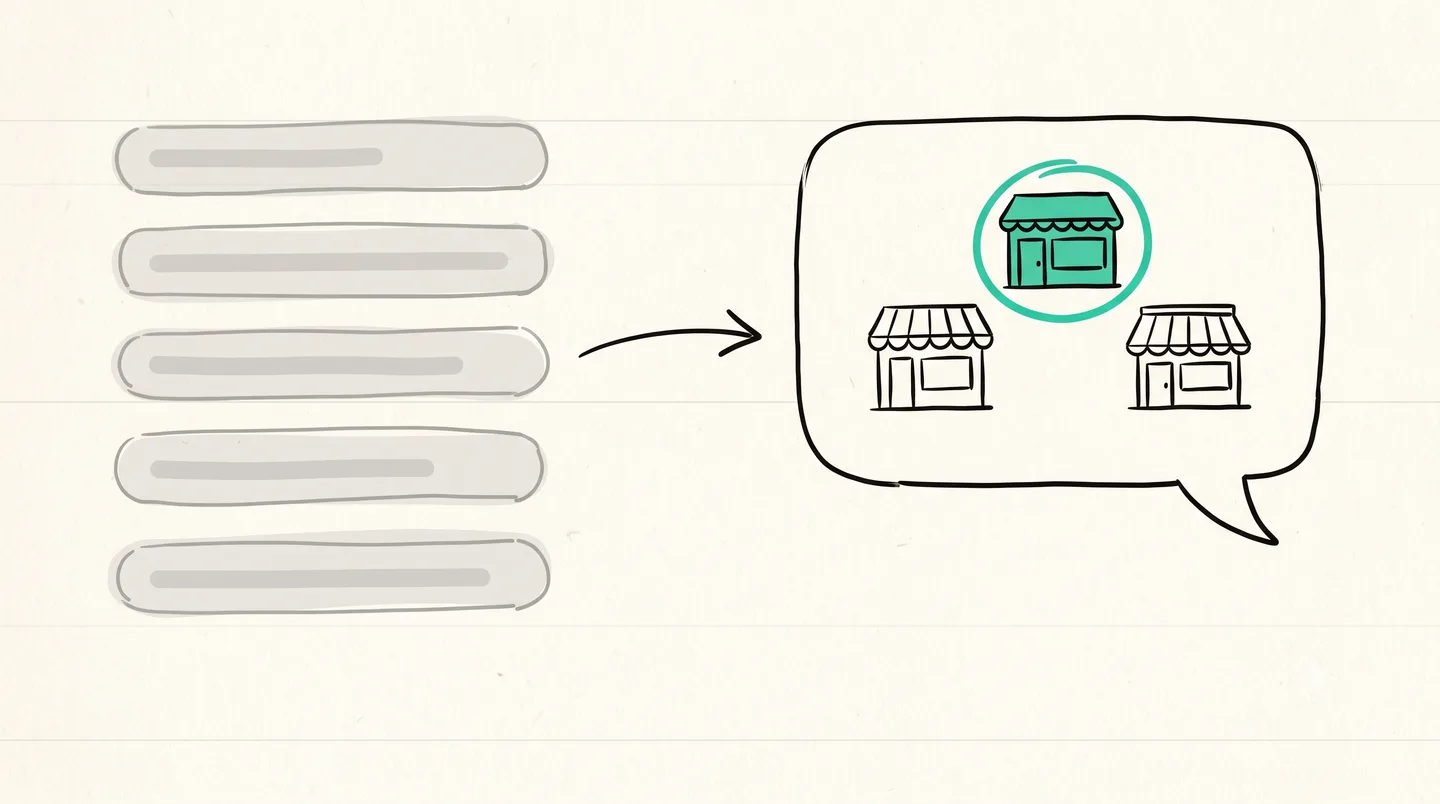
Here's the one-line version: SEO is about ranking high in Google's list of blue links. GEO, Generative Engine Optimization, is about getting the AI to name you inside the answer it writes. One fights for a spot on the list; the other fights to be the answer itself.
Picture a real customer. Before, someone looking for "Puchong aircon repair" would Google it, skim a few links, and click into two or three. Now, more and more people just open ChatGPT, or read that AI box at the very top of Google, and type "any reliable aircon repair in Puchong?" The AI hands back one tidy answer with a couple of names in it. If you're not one of those names, you never even get the chance to be clicked. That's the shift.
02Why isn't SEO alone enough in 2026?
Short answer: because the way your customers search has changed. Google now puts an AI Overview at the top of the results. ChatGPT and Perplexity can go online and answer directly. More and more people read that answer and stop. They never scroll down to the blue links at all. There's even a name for it: zero-click search.
- The answer is the new front page. If the AI's answer doesn't include you, it doesn't matter how well you'd have ranked in the old list. That list is the part fewer and fewer people ever reach.
- Your competitors can get named, and you don't. When AI answers "best X in KL" with three businesses, being left out is a silent, invisible loss. You'll never see the customer who asked, got three other names, and messaged one of them instead.
- But SEO didn't die. GEO is an extension of SEO, not a replacement. The foundation is the same: a site AI can crawl and clearly understand. It's just that the finish line now has a second post: not only "rank", but "get quoted".
03So what does GEO actually involve? (in plain words)
Boil it all down and it's one sentence: make it easy for AI to understand you, trust you, and quote you directly. On an actual website, that comes down to five things:
- Answer-first. Every page opens with one direct, clean answer the AI can lift in a single glance: exactly like the "30-second quick answer" box at the top of this article.
- Structured data + a real, named author. Behind the scenes, tell the AI in a machine-readable format who wrote this, what the business sells, what it costs, and where it is. A real person with a name (not a faceless brand) is something AI is more willing to trust.
- Concrete, quotable facts. Spell out the specifics: RM 590, 2026, Puchong / Malaysia. AI quotes concrete numbers and place names, not vague lines like "affordable prices".
- Don't bury your content inside images. If your prices, services and selling points only live on a poster graphic, AI can't read them. It reads text. A pretty price image AI literally cannot see.
- Let the AI crawlers in. Your robots.txt shouldn't be blocking AI crawlers, and you want a sitemap plus an llms.txt: think of it as a map you draw specifically for AI.
If that list looks like a lot. It's genuinely not, once it's part of how a site is built. These are exactly the things I build into every website as standard. Not an add-on "SEO package" with an extra invoice, just how the foundation gets poured.
Curious whether AI can actually find your current site? Send me your website link on WhatsApp. I'll tell you honestly whether ChatGPT / Perplexity can "read" it, and what's missing. Free, no jargon, no hard sell.
💬 WhatsApp us →04Do I need to pay someone monthly for "ongoing SEO"?
Honest answer for most small businesses: no. Let me be fair about when it does make sense, and when it doesn't:
- Monthly SEO retainers exist, and for big players, they're fair. If you're a large company fighting to hold the #1 spot on fiercely contested keywords, paying every month for ongoing content and links is a real strategy.
- But a small business that just needs to be found locally doesn't need a monthly rent. What you need is the foundation poured correctly, once. Answer-first pages, structured data, a real author, crawlable content, an llms.txt: done properly at build time, they keep working without a recurring bill.
That's exactly how I do it: the basic SEO + GEO is built in when I build the site, a one-time thing, handed over with the website, with no compulsory monthly fee (only domain and hosting are billed separately, at their real small cost). The day you genuinely outgrow this, when you're battling giants on the most competitive keywords and need content pumped out every week, that's a later chapter. It's not the thing a small business should worry about first.
053 quick self-checks: can AI actually find your site?
You don't need any tools for this, just five minutes and your phone:
- Ask an AI the way your customer would. Open ChatGPT (with search on) or Perplexity and type a real customer question: "any recommended aircon repair in Puchong?" or "how much is a small business website in Malaysia?" Is your name in the answer? Are your competitors?
- Check where your key info lives. Your most important facts (price, services, location) are they written as text, or baked into a poster image? If it's all in images, AI can't read a word of it.
- Look at your homepage's first screen. Is there one direct answer that could be lifted in a glance, or do I have to read three paragraphs before I even know what you sell?
If two of those three trip you up, what you're missing usually isn't more ad budget. It's a website with the GEO foundation done right. And being found is only step one: how you catch that traffic and turn it into a loop that feeds itself, I wrote up separately in the "built a website but no one comes" post.
The whole thing, in one line
This was never about chasing the newest buzzword. It's about a simple, unglamorous truth: your customers are starting to ask AI instead of Google, so your website has to be something AI can read, trust, and quote.
